Only 26% of Watch Buyers Want to Tell Time. What Do the Rest Want?
Your phone already tells the time. We sorted 14 reasons people wear a watch anyway, from a father’s gift to a phone-scroll trap.
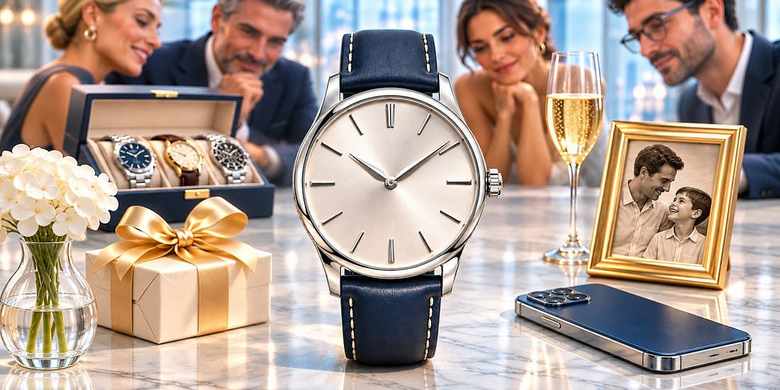
Why do some of us still strap something to the wrist every morning? A 2025 survey by Deloitte, a consulting firm, asked people planning to buy a watch for themselves to pick the statement that fit best. Only 26% said to tell the time. The rest chose a reward, looks, collecting, trends or status. We went looking for the real reasons and sorted 14 into practical, personal, social and collecting groups. Some will sound like you. A few might surprise you.
THE PRACTICAL REASONS, AND WHERE THEY WOBBLE
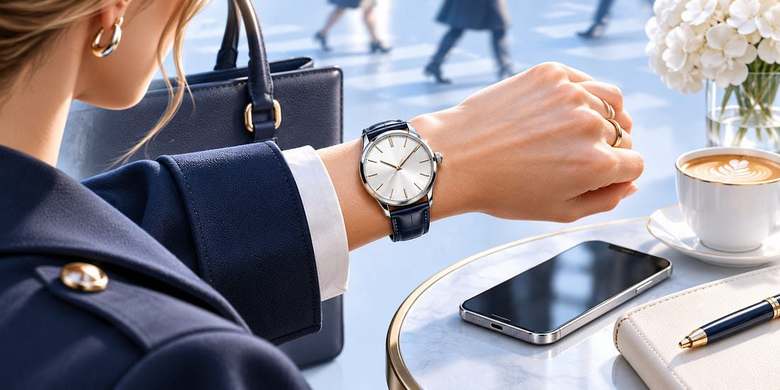
To tell the time at a glance. A turn of the wrist beats fishing a phone out of a bag. In a survey of 500 women by the Japanese magazine Kufura, 37% wore a watch, and the most common reason was that a watch shows the time at once. One wearer called pulling her phone out of her bag a hassle that risked dropping it, and another said openly checking a phone in front of someone seemed rude.
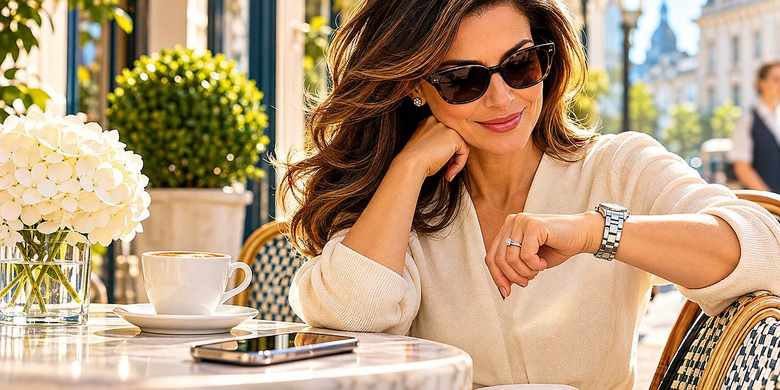
To leave the phone alone. Writer Eva Wiseman described in The Guardian how lighting up her phone to see the time can end 40 minutes later, dazed and thirsty, after scrolling Instagram and half the news. On Substack, Kate Brenton was watching other people’s dogs on her phone when her own dog sighed at her. She wrote in It’s about time that after she started wearing a watch again, her phone’s report showed less use. The largest survey we found is a 2026 survey of 6.6K German-speaking people recruited through an app for healthier internet use. 29.9% said they often or very often stayed on the phone longer than planned after checking the time, and traditional-watch wearers scored 20.58 on a 56-point compulsive internet use scale against 24.38 for non-wearers. The survey did not ask why people wore watches, and the authors say it cannot show cause. Habit can outlast hardware: a writer who publishes as Canon Fodder wears a mechanical watch with an open caseback and, as he admits in On time, checks his phone for the time anyway.
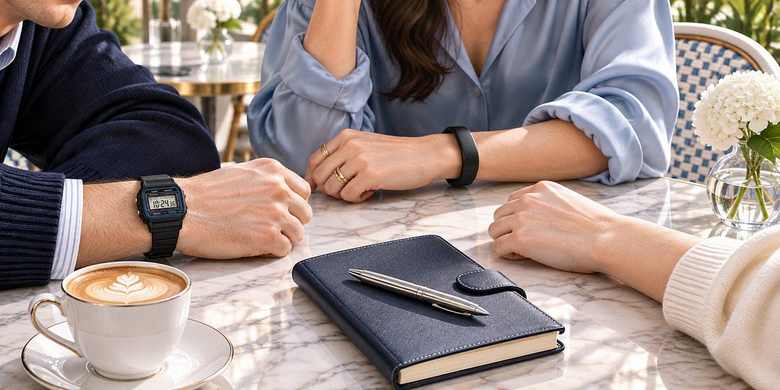
To stay on schedule. Wearers do tend to show up a little earlier. Psychologists David Ellis and Rob Jenkins reported in a 2015 paper that people who regularly wore a watch arrived at appointments 4.12 minutes early on average, and people who did not wear one arrived 0.90 minutes early. Both groups were on time, and wearers had a small edge. Two years before that paper, Ellis’s 2013 PhD thesis tried to answer a related question: does putting a watch on someone’s wrist change when they arrive? It gave 48 people who did not wear watches a Casio F-91W digital watch, a plain black wristband or nothing for 4 weeks, with 16 people in each group, then checked their arrival times again. Across the three groups, arrival times changed about the same, so the watch showed no measurable effect. Still, 12 of the 16 people who wore it wanted to keep it.
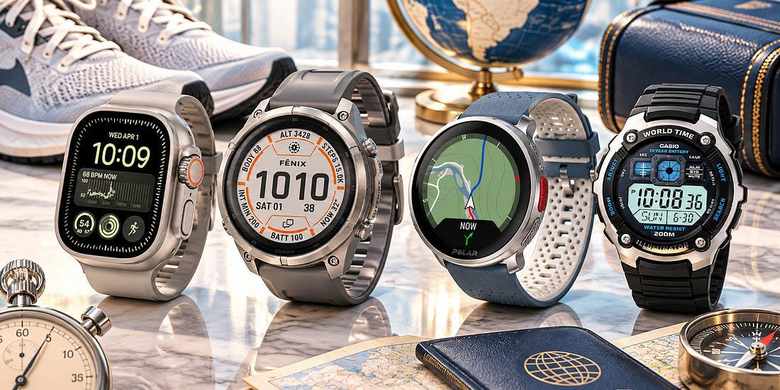
To do something specific. A chronograph can time a lap, and a GMT hand can track home time. Only 2% of prospective buyers answering Deloitte’s personal-use question selected a specific complication. A number on the wrist can also ruin a walk. In a 2023 trial by a Stanford-led team including Octavia Zahrt and Alia Crum, some Apple Watch wearers saw a step count 40% too low. They felt less active and reported a worse mood, though their real steps did not change.
Released in 1989, the Casio F-91W is considered by many to be everything you actually need in a wristwatch. I’m inclined to agree. Long battery life, accurate digital quartz, alarm, stopwatch, it pretty much covers the essentials. The design is timeless too, and still looks cool by today…
THE PERSONAL REASONS, WHERE IT GETS WARM
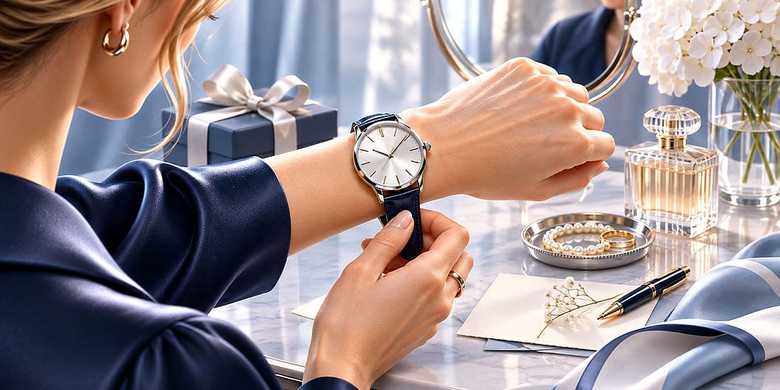
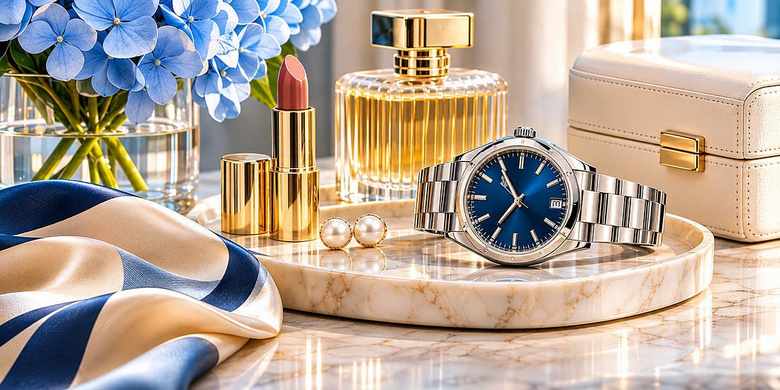
To finish an outfit and express taste. Among Deloitte’s prospective buyers, 17% named looking good and 17% accessorizing, which together outweigh timekeeping by our addition. Taste showed up at checkout in August 2026, when Dutch brand GRØNE released two versions of its Horologium at the same price and edition size. Orange won an informal comment-section poll, and the salmon “Something Classic” won the race to checkout, selling out in 4 minutes against 6 for the orange “Something Quirky,” as we reported.
Read The GRØNE Horologium: Gone in Six Minutes
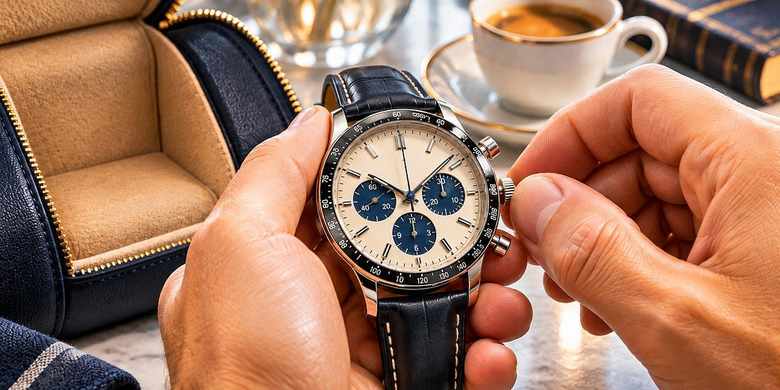
To enjoy the mechanics and the ritual. Writer Matt Roche tells a story in The Watch. He and his brother bought matching watches to celebrate a company they built. He lost his, his brother gave him his own, and it runs fast. He winds it every day and says he does not even check the time on it. Jewelers Mutual, a US insurer, reported from a June 2025 survey of more than 1.5K watch owners that 54% of collectors cite the feeling of wearing a nice watch as a primary driver. It added that collectors rotate by occasion, mood, season or outfit.
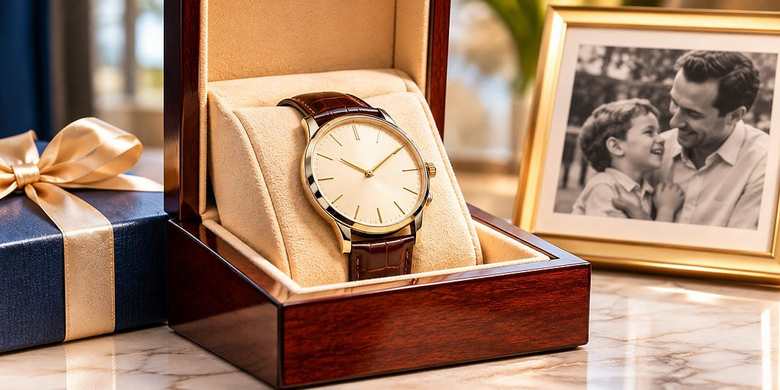
To mark an achievement or feel close to someone. As a child, Canon Fodder stared at a Rolex his father owned and was not allowed to hold. Now he owns a watch he bought to give his son at 18. He wears it more than his other one and leaves it ticking on the nightstand beside the baby monitor. Joey Driftwood bought his first watch to mark a change after 30 years, as he wrote in How I Chased My First Watch. Gifts are not always simple, though. A 2017 study of watches passed from father to son by Aurélie Kessous, Pierre Valette-Florence and Virginie de Barnier covered 15 fathers, 48 owners and 15 sons. Freedom, accomplishment, tradition and legacy came first, then family finitude, contempt or resistance, then comparison and social pressure for the sons. In Deloitte’s survey, 20% of prospective buyers chose rewarding themselves, and 31% of respondents answering a separate purpose question named a gift, with multiple answers allowed.
I’m writing this post about the most important timepiece I have, and will ever have, in my life. A 1970s Oris Junior…
THE SOCIAL REASONS, WHERE IT STINGS
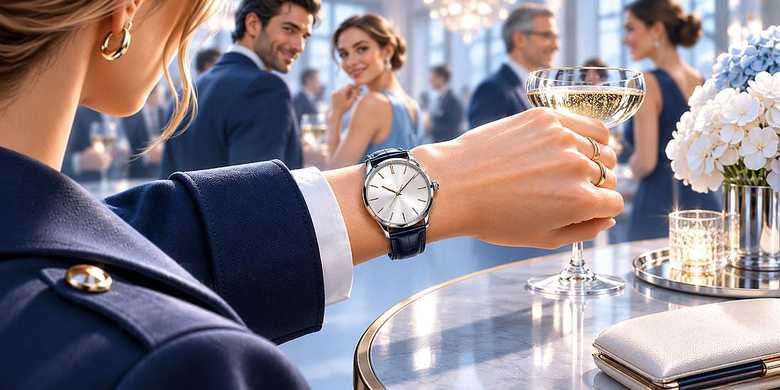
To signal success. People expect an expensive watch to win them friends. In a 2018 experiment, 150 online participants imagined going to a bar to make friends, and the people they hoped to meet disagreed. Those picturing themselves expected an expensive Tag Heuer to make them more attractive (4.45 against 3.70 for a generic watch), while those picturing a stranger walking in rated the generic watch higher (4.57 against 3.81). In 2019, Christopher Cannon and Derek Rucker reported that luxury goods read as higher in status and lower in warmth. A candidate who mentioned luxury brands won a publicist job 73% of the time and an HR job 13% of the time, per Kellogg Insight. Only 4% of Deloitte’s buyers named status, and none of these studies tested a watch on a wrist.
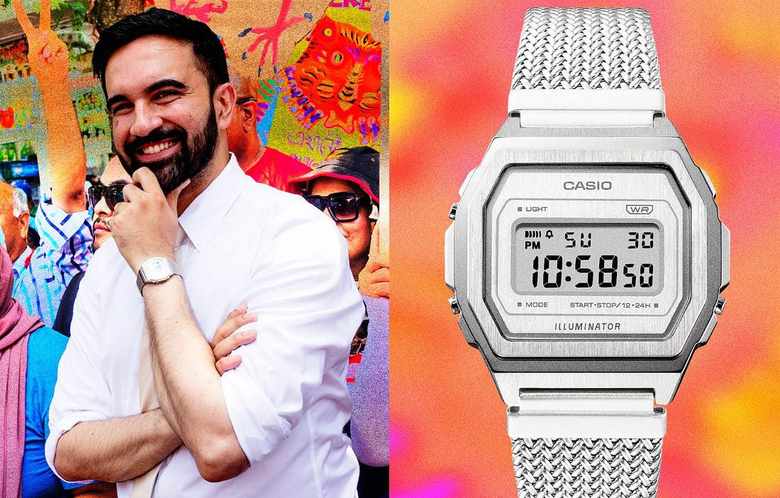
Not every signal costs a fortune. New York City Mayor Zohran Mamdani wears a roughly $160 Casio A1000MA-7VT that drew coverage for its approachable look and sold out on Casio’s website, per WatchPro. There may be a way out of the friendship trap. SungJin Jung and colleagues found in a 2024 paper that people who openly expressed passion for a luxury product were seen as more authentic and warmer, with no loss of status.
The Watch You Can Never Actually Wear
In some part of my imagination, specifically for watches, the grail watch is a gold Rolex Daytona…
To be recognized by another enthusiast. Jonah Berger and Morgan Ward found in a 2010 study that 84% of mid-priced sunglasses carried a logo against 30% of the priciest, and that people who knew a category read the subtle ones as a sign of being in the know. They studied sunglasses and handbags, not watches.
My wife and I saw Luke Combs live for the third time this weekend, first weekend of a UK trip, with my sister and brother-in-law in tow. If you've never seen him live, genuinely, go. End of. He is one of the best live performers I've come across in any genre, watch talk aside entirely…
THE COLLECTING REASONS, WHERE MONEY WALKS IN
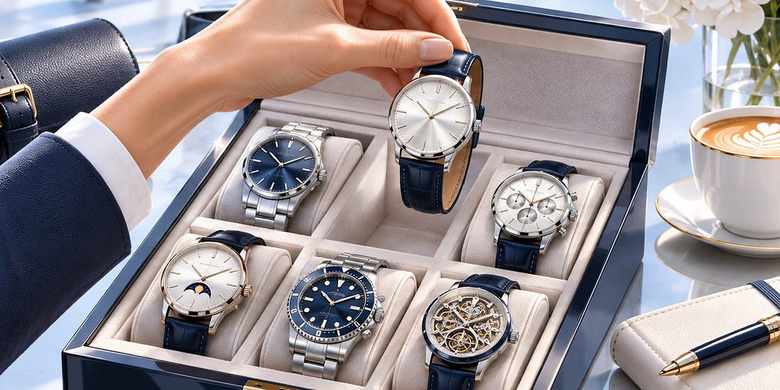
To enjoy the hunt. Watch writer Todd Searle wrote in Thinking About Less that the joy came from chasing watches down, and that once money changed hands he “felt hollow.” He cut his collection to three watches plus one that rotates, and he wanted a deeper connection with the watches he actually wears, not ones sitting unworn in a safe. Psychology has a similar finding. In a 2009 study, Leonardo Nicolao and colleagues found that experiences make people happier than things when they go well, and Nicolao believes the reason is that we get used to a new object faster than we get used to an experience. The thrill of owning fades sooner than the thrill of doing, which fits what Searle describes.
“One trait shared by all true collectors,” Muensterberger warned, “is that there is simply no saturation point.” The thirst to add more is unquenchable. According to Muensterberger, there will never come a point when someone like Breitwieser feels he has enough. Brain scientists agree. Obsessive collecting, Stanford University neurologists have shown, may be caused by neurochemical imbalances that produce an impulse-control disorder—one capable of creating an unstoppable and sometimes criminal collector. The intoxicating flood of brain chemicals peaks during the pursuit, not the capture. When the quest outshines the treasure, you don’t want to stop questing. This helps explain the ceaseless nature of a collecting addiction…
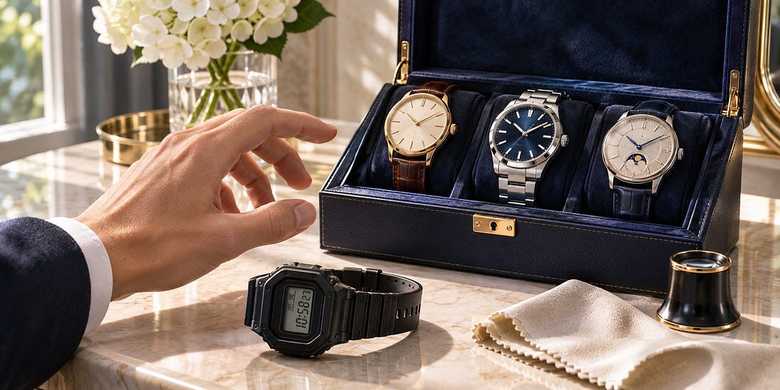
To wear the collection. Jewelers Mutual found 83% of collectors own several watches, and value can keep a piece off the wrist. In an interview with the men’s lifestyle site SL.Man, trader Andy Collins said the Rolex his parents gave him is easier to wear because it trades only about 20 to 25% above retail. With a hotter model, like a Patek Philippe Nautilus, he said, he would always be thinking, “Should I sell this now?” Subdial co-founder Christy Davis told the same interview that for collectors the financials are secondary but important. She sells watches. In The Mirage of Having A One Watch Collection, Chris Xavier of The Seasonless wears a G-Shock on public transit and calls his nicest watches too nice for every day. Even his everyday watch stresses him out.
LESSONS LEARNED
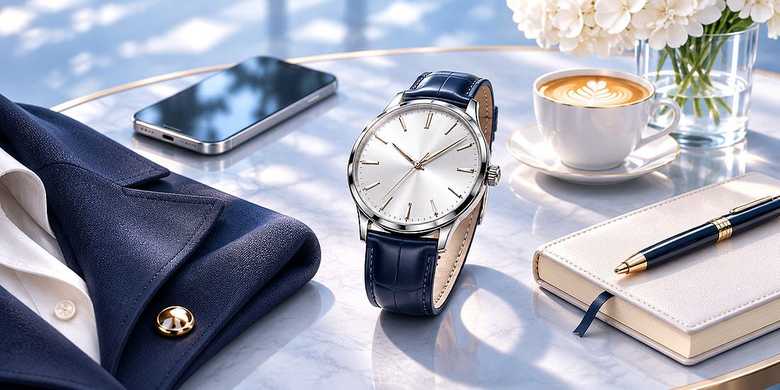
- To keep the phone in your pocket, check the time on your wrist.
- Wear it for the pleasure, not for a habit boost.
- Treat looks as a real reason.
- Say why you love the watch.
- Keep one watch you can wear without worry.
When did you last choose a watch for a reason that had nothing to do with the time?
Next up: Watch Words, Part 1: Is Rolex an Independent?
ABOUT
Watch Lover XO is written by two collectors who wear and follow watches, from everyday favorites to rare independent pieces. We cover the secondary market, new releases and the watchmakers behind them.
For more images and videos, follow watchlover.xo on Instagram.