Watch Words, Part 1: Is Rolex an Independent?
Manufacture, in-house, ébauche, independent, AHCI and microbrand: six words that carry no legal definition and still move the price of a watch.

A dealer calls one brand “a true manufacture,” a forum dismisses another as “just a microbrand,” and a collector swears his watch is “independent.” None of those words has a legal definition, and all three move the price. This is Part 1 of Watch Words, a multiple-part series on watch vocabulary, written for beginners and for anyone who nods along at a boutique without being sure. We start with who makes the watch: manufacture, maison, in-house, ébauche, independent, the AHCI and microbrand.
MANUFACTURE
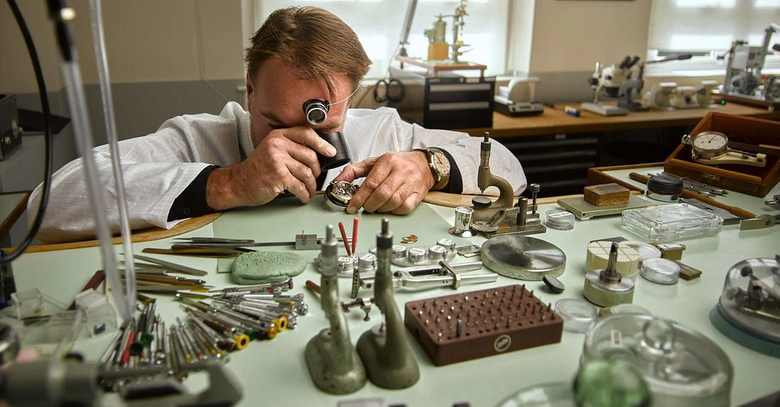
Manufacture is French for a factory, and in watch talk it means a company that makes the parts of its own base movement and assembles a complete caliber from them. The standard trade reference, the Dictionnaire professionnel illustré de l’horlogerie, defines it that way. No law sets the bar, so the word carries prestige without a test. Horopedia, an online watch encyclopedia, traces the marketing use of the term to the communication departments of the big watch groups from the 1980s on. When a brand calls itself a manufacture, the useful follow-up is which parts it makes.
MAISON
Maison is French for house, and many brands use it for themselves. Richemont, the Swiss group behind Cartier and Vacheron Constantin, calls every one of its brands a Maison in its own annual reports. The word sounds old and personal, and it says nothing about who makes the movement or who owns the company, so read it the way you read “artisanal” on a bread label.

IN-HOUSE
In-house means the brand designed and built the movement itself instead of buying one. Almost nobody makes every part. A 1934 paper in the journal of the Swiss Society of Economics and Statistics described manufactures that made their own base movements and still bought their springs from specialists, and a company that buys its crystals or hairsprings can still count as a manufacture today. In-house works better as a scale than a yes or no. At one end, a brand designs, machines and assembles the movement in its own workshop. At the other, it buys a finished movement, adds a decorated rotor and prints “in-house” in the brochure.
ÉBAUCHE
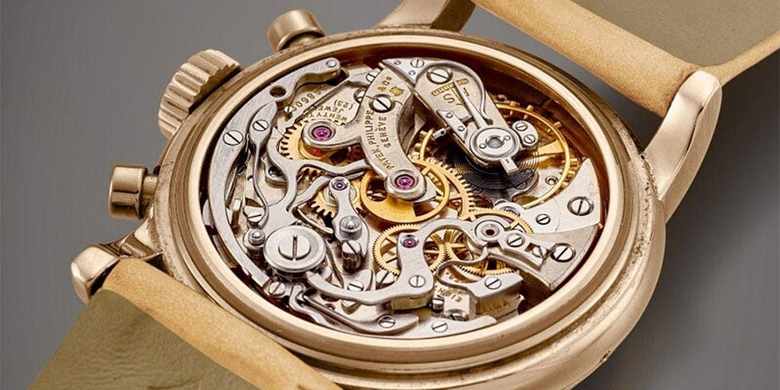
An ébauche, pronounced “ay-bosh,” is a base movement sold unfinished: plates, bridges, wheels and winding parts, without the balance, escapement or mainspring. The brand that buys it finishes, regulates and usually decorates it. Valjoux and Lemania were among the historic ébauche makers. Two brands can start from the same ébauche and end up with very different watches, which is exactly why “in-house” turns into an argument.
INDEPENDENT
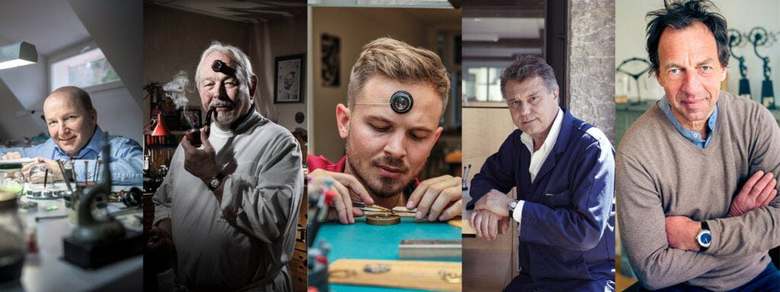
An independent is a brand that no large group owns and that makes its own decisions about its watches. Chrono24 Magazine, the editorial side of the Chrono24 marketplace, defines an indie as a manufacturer outside a major conglomerate such as Richemont or the Swatch Group, and names F.P. Journe, MB&F and H. Moser & Cie. as independents.
Read Inside Grönefeld: Masters of Independent Watchmaking
The argument starts at the top of the market. Rolex, Patek Philippe and Audemars Piguet answer to no group either.

So is Rolex an independent? On paper, yes. The Hans Wilsdorf Foundation, a private Swiss foundation, took over the company when its founder died in 1960 and still owns all of it, so no group or outside shareholder sits above Rolex. To collectors, though, the word now means small, and a brand that size does not feel independent to them. The Italian Watch Spotter blog answers the same question with “yes and no,” and we agree: ownership makes a brand independent on paper, and size decides whether collectors will call it one.
AHCI
The AHCI, the Académie Horlogère des Créateurs Indépendants, is the closest thing independents have to an entrance exam. Svend Andersen and Vincent Calabrese, two watchmakers working in Geneva and Lausanne, founded it in 1985 to keep independent craftsmen from disappearing inside big brands. Its first exhibition opened that summer at the watch museum in Le Locle, a town in the Swiss Jura. Joining takes at least two years as a candidate, sponsorship from existing members, at least three exhibitions and a unanimous vote of the general assembly, and a candidate does not need a watchmaking diploma.
Read Konstantin Chaykin's Prototype Failed. His Desperate Backup Plan Had a Face.
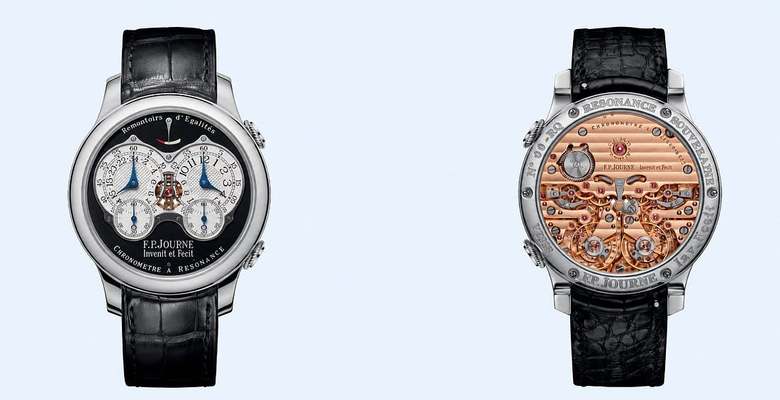
Members include François-Paul Journe, Kari Voutilainen, Philippe Dufour and Konstantin Chaykin. Three members, Chaykin, David Candaux and Sylvain Pinaud, each have a watch among the 84 nominees for this year’s Grand Prix d’Horlogerie de Genève, the industry’s annual awards, which names its winners on Nov 7, 2026. Chaykin’s nominee is the ThinKing Mystery, 1.65mm thin and priced on request, in the Mechanical Exception category. We got to touch one at Contemporary Istanbul, the art fair, in September 2026, and we were surprised by how thin and light it was. Membership also shows up at auction. AHCI points to auction records set by pieces from George Daniels, Dufour, Vianney Halter and Journe, and says the watches its members made for the 2021 Only Watch charity auction raised about $8.2M at today’s rate.
MICROBRAND
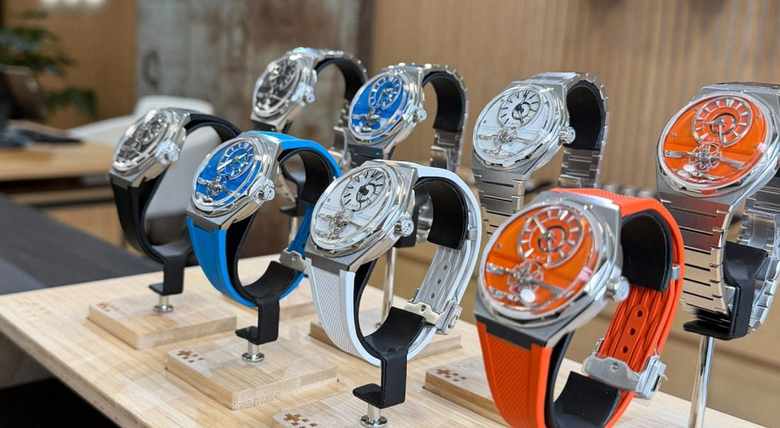
A microbrand is a small company, usually started by enthusiasts, that designs its watches, has outside suppliers make them and sells mostly online, direct to the buyer. Christopher Ward, founded in 2004, often gets the credit as the first. A microbrand can be independent, since no group owns it, and Chrono24 Magazine notes that the reverse does not follow: plenty of independents are far too large to count as microbrands. The word itself splits collectors. Quill & Pad, an online watch magazine, notes the debate over whether “microbrand” is a compliment or a put-down, while “independent” only ever reads as praise.
Next in Watch Words: who really owns your Swiss watch, and why it may answer to a French luxury group.
ABOUT
Watch Lover XO is written by two collectors who wear and follow watches, from everyday favorites to rare independent pieces. We cover the secondary market, new releases and the watchmakers behind them.
For more images and videos, follow watchlover.xo on Instagram.