F.P. Journe Made Tantalum a Grail. China Just Made It a Commodity.
Tantalum watch prices from the F.P. Journe Chronomètre Bleu to Atelier Wen and H. Moser, and why a Chinese tantalum case sold at cost changes the math for every brand charging for the metal.
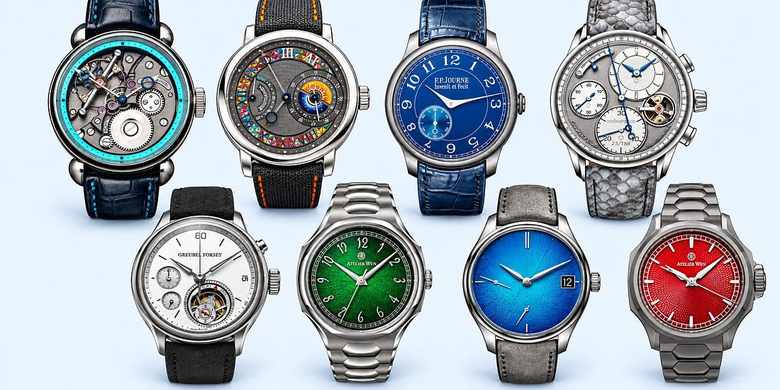
Tantalum, the dark gray metal F.P. Journe turned into a collector obsession with the Chronomètre Bleu in 2009, is now something a small brand can order from a Chinese workshop as a finished case or a full bracelet, in one case at cost. The metal was never expensive. The premium paid for the skill to machine and polish it, and that skill spread. Below: what tantalum is, who made it famous, what it sells for from a $1.5K microbrand to a $930K Royal Oak, and how Journe, H. Moser and Zenith price it now that the case alone cannot.
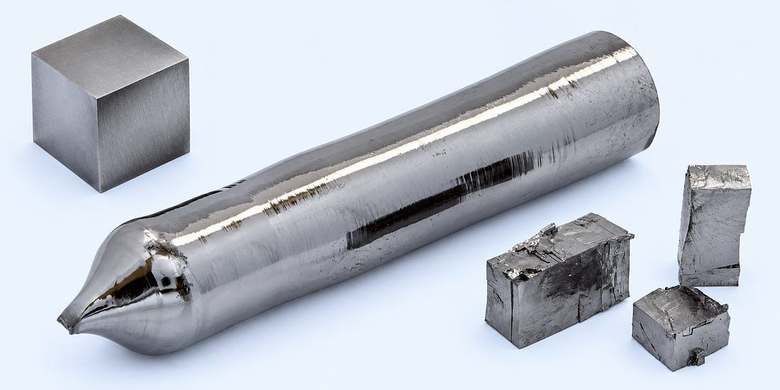
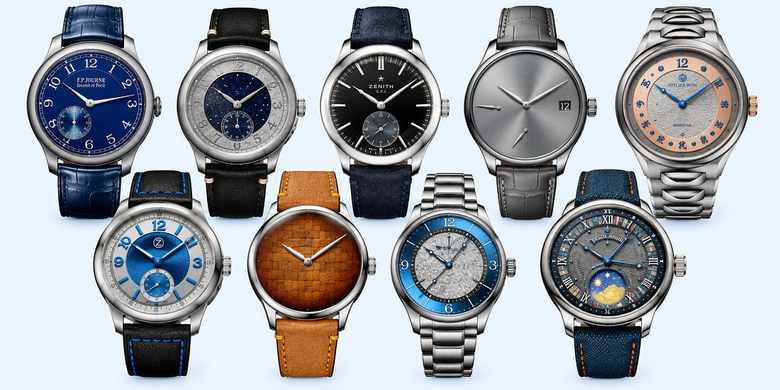
We wore more tantalum than expected during New York Watch Week in October 2026. The watch that made the point was the Massena LAB x Atelier Wen Inflection Shuò at WatchTime, which we covered last week: a 40mm case and full integrated bracelet in 99.9% tantalum, from a brand that did not exist in 2016. At Windup, Tony Traina of the Unpolished Watches Substack was handling a Chinese-made tantalum case a microbrand offers buyers as an upgrade at cost. His verdict: tantalum used to mean expensive and no longer does. The two watches sat a few blocks apart in the same week, and the distance between them is this piece. The metal that cost Audemars Piguet, Journe and Moser years and ruined tooling is now something you order.
Listen The Tantalum Trap: How China Broke Watchmaking’s Most Guarded Secret
WHAT TANTALUM IS, AND WHY THE PRICE WAS NEVER ABOUT THE METAL
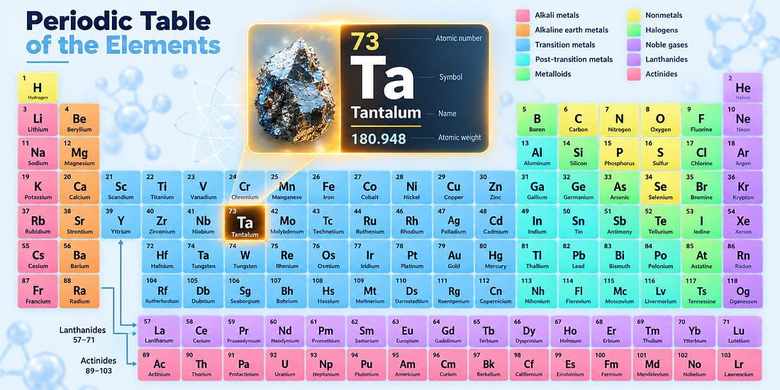
Tantalum is element 73, a refractory metal around 16.6 g/cm³, close to 18k gold and twice the weight of steel. It melts above 5,400°F, shrugs off aqua regia, the acid that dissolves gold, and forms an oxide film in air that gives it a dark gray, faintly blue color no coating matches. Revolution and Time+Tide cover the chemistry. The pricing: the raw material is cheap and common, about 250 times more abundant than gold per Time+Tide, which also notes that brands buy it from refiners and have no obligation to say where the coltan it came from was mined. The US Geological Survey put the 2025 ore price at $180 per kilo of oxide content. Finished Chinese ingot was about $1K per kilo in May 2026 per SMM, the Shanghai metals data service. A case uses a few tens of grams, so the metal in a tantalum case costs tens of dollars. Gold runs more than a hundred times that per kilo.
Fabrication is where every dollar of premium came from. Tantalum is ductile and sticky: it seizes, tears and galls cutting tools, holds heat at the cutting edge, and its swarf can ignite in air. Everyone who made it says the same thing in different units. Kari Voutilainen, the Finnish independent, told Revolution milling platinum is a 3 out of 10 and tantalum a 10. Josh Shapiro of J.N. Shapiro said an end mill good for 20 steel cases lasts a third of one tantalum case; he made the first tantalum case produced in-house outside Switzerland in December 2021, the Infinity Tantalum, 26 pieces at $33K, and one later sold at Phillips for $40.6K.
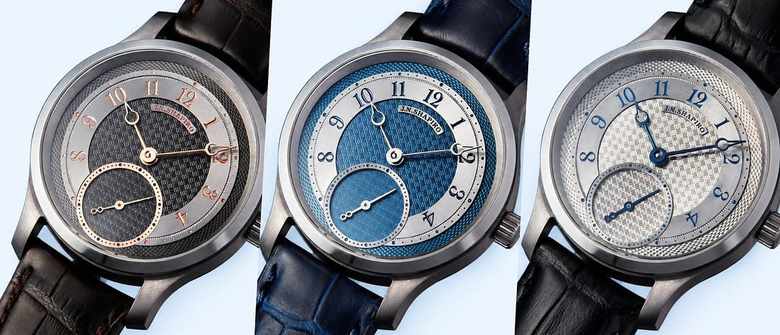
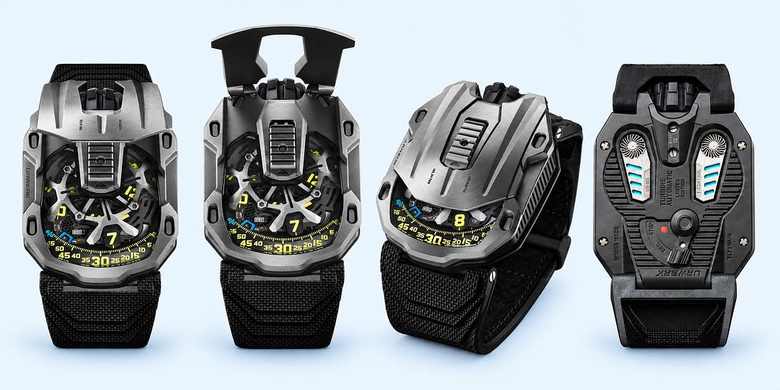
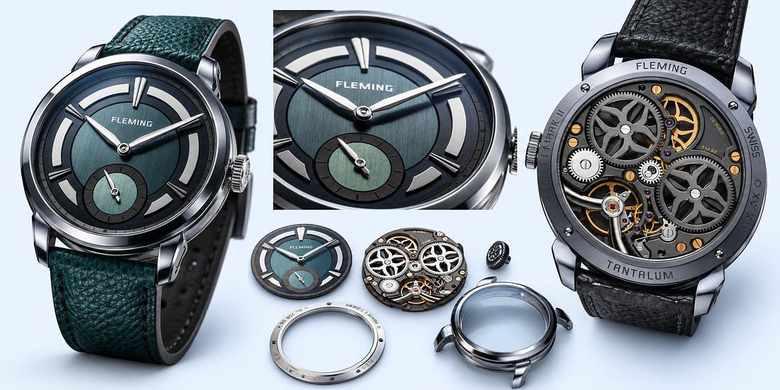
Martin Frei, co-founder of Urwerk, said in a 2021 press release his team made him promise never to use it again after the UR-110 TTH, whose tantalum bezel cut CNC bit life by a factor of three. Boîtiers de Genève, Journe’s case maker, calls its polishing method a manufacturing secret; a Quill & Pad writer touring the factory in 2017 was shown every component made except the Bleu case. Fleming, a young American brand, found one Swiss case maker willing to try, spent almost two years on it, and says the finished case costs as much as platinum or more.
A skills moat erodes. Know-how gets copied, taught or industrialized, and the premium it supported goes with it. A gold case will always cost what gold costs. A tantalum case costs what the best available machinist charges, and that machinist is no longer necessarily in Geneva.
A SHORT, ODD HISTORY
Audemars Piguet’s own archive dates tantalum’s entry into watchmaking to 1988: two quartz Royal Oaks early that year, then the 14486TR in tantalum and pink gold, the first mechanical one, 215 made.
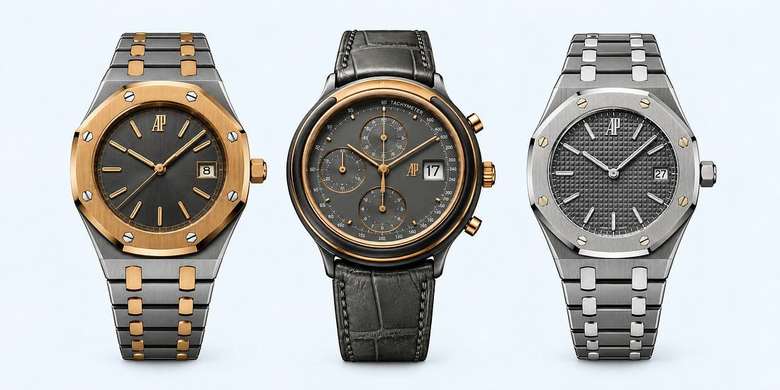
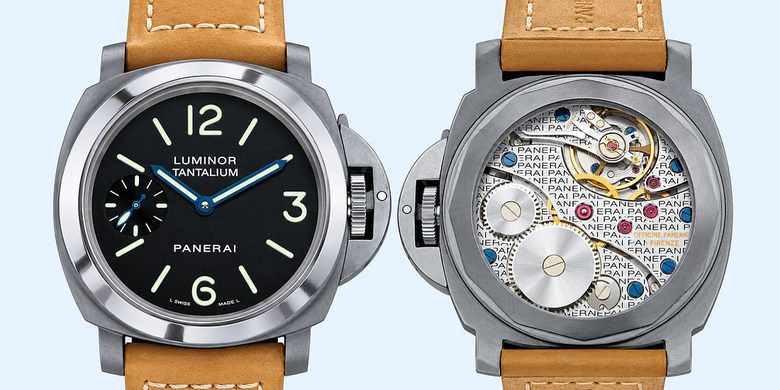
The story repeated everywhere and absent from AP’s archive is that King Juan Carlos of Spain wanted a Royal Oak that would not glint while hunting. AP kept the metal through the 1990s, almost always brushed, and rationed it since: Q Raghib, who writes the Substack Form. Function. Time., covered the 2011 Royal Oak 15201TS, ten pieces for a collector forum’s anniversary with a tantalum bezel and center links on a steel case at about $57K before tax. Edouard Meylan, Moser’s CEO, was given a tantalum AP for his 18th birthday and told Quill & Pad he never forgot it. Jaeger-LeCoultre polished a tantalum case on the Odysseus chronograph in 1989. Omega put it in the bracelet center links of the Seamaster 300M chronograph in 1993, where most people first saw the color. Then the metal went quiet, apart from a 300-piece Panerai in 2003 and Hublot putting it in the Big Bang catalog from 2008.
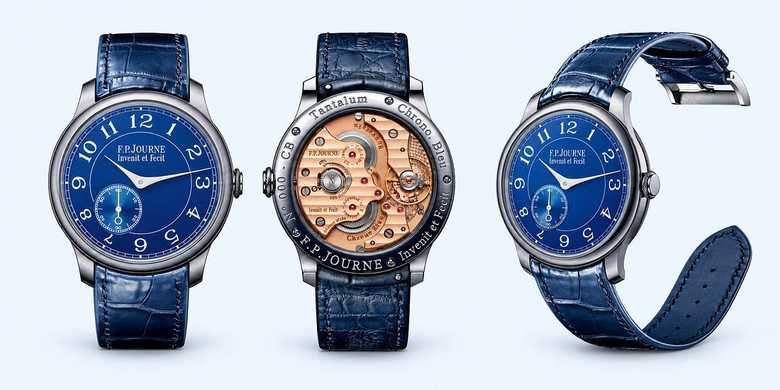
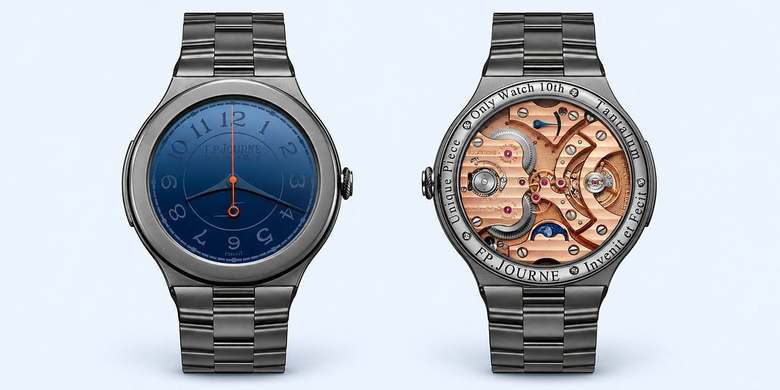
F.P. Journe changed its reputation in 2009 with the Chronomètre Bleu, the first time-only dress watch in tantalum. The dial came first: Journe told Revolution he could not make the blue dial he wanted until 2007, and only then picked the metal to suit it. The case was polished when, per Moser’s own press materials, most tantalum cases were sandblasted or satin finished, and the caliber 1304 inside is solid rose gold.
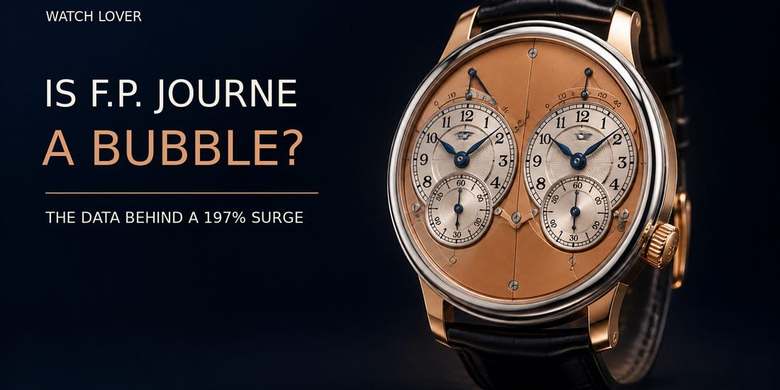
Read Is F.P. Journe a Bubble? The Data Behind Its 197% YoY Surge
It was meant as the entry point to the brand, and per Phillips, the auction house, Journe wanted it cheaper still until case and dial costs made that impossible. He refused every other tantalum request and kept the metal for Only Watch charity pieces, a run the SF Watch Lover XO Substack cataloged, including a 2024 Chronomètre Furtif Bleu on the brand’s first tantalum bracelet that sold for about $2.4M.
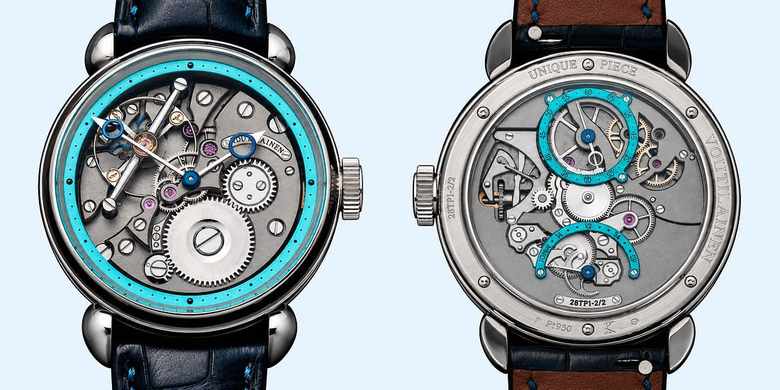
Voutilainen had made a one-off tantalum decimal repeater, the Tantalor, in 2008. In 2019 he cased ten of the 26 inverted Caliber 28 watches in tantalum at about $118K at the time, alongside eight in titanium and eight in platinum, and later made two pieces mixing tantalum and platinum, one of them listed by the retailer EsperLuxe at $140K.
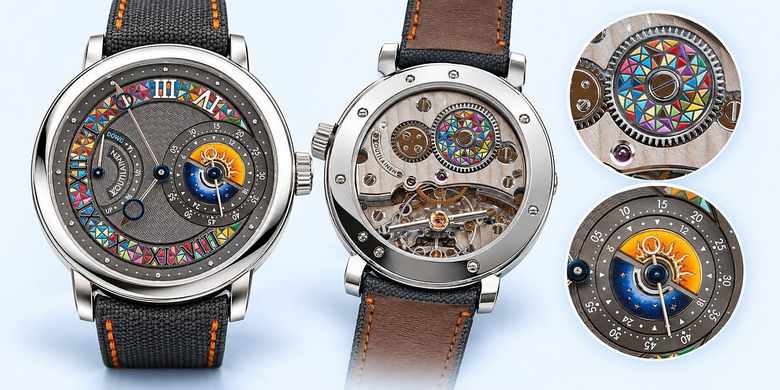
In March 2025 Louis Vuitton put a tantalum case middle with platinum bezel and lugs on the five-piece LVKV-02 GMR 6 with Voutilainen, at about $515K before tax, and sold all five the first day.
Urwerk closed the UR-105 line in 2021 with a 12-piece tantalum-hull edition.
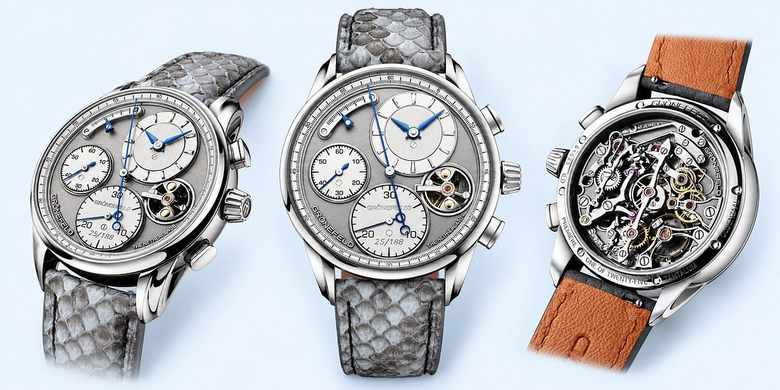
The Grönefeld brothers launched the 1941 Grönograaf in tantalum in 2022, 25 pieces, after years of persuading their case maker. H. Moser & Cie. shipped its first tantalum watch in 2023 after more than two years developing a polish to its standard.
WHAT THE PRICES SAY
Prices are the cleanest evidence that tantalum was sold as a capability. Retail figures below are before tax, checked October 25, 2026; auction results include the buyer’s premium; Swiss franc and Hong Kong dollar results are converted at October 26, 2026 rates and rounded.
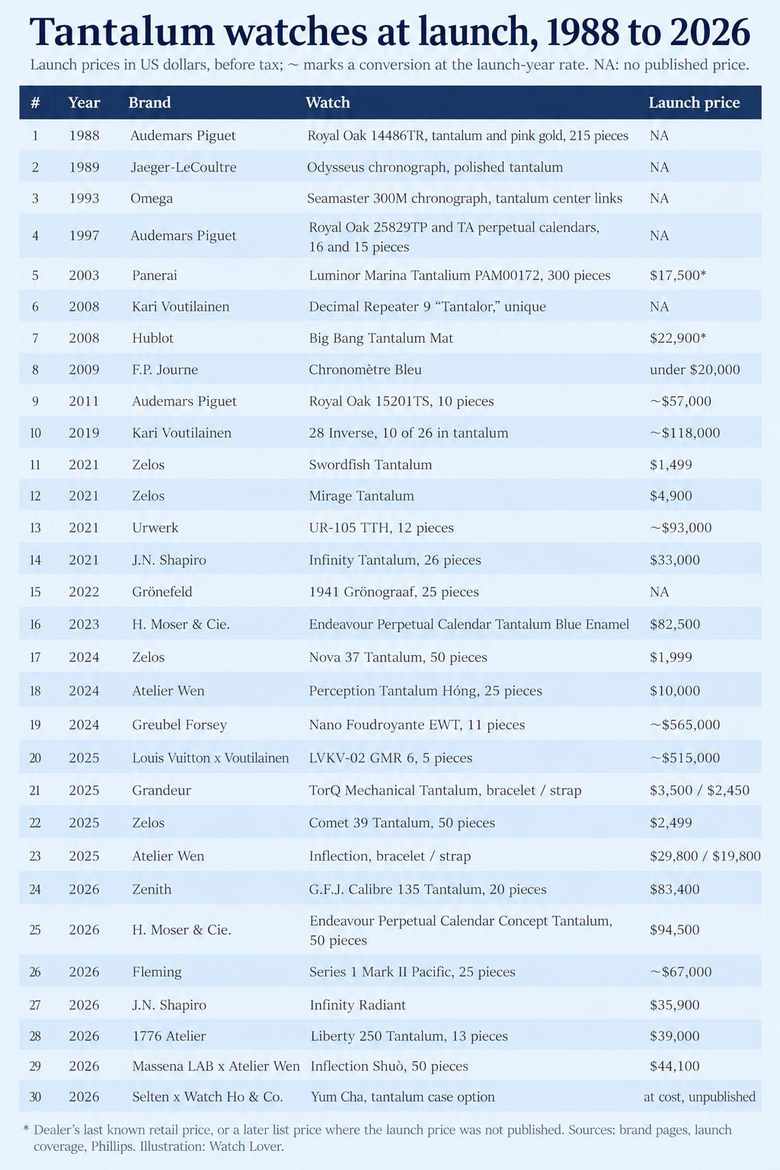
The Chronomètre Bleu launched under $20K in 2009, now retails at $37,400 and is nearly impossible to get at retail. In September 2026 Phillips sold a 2021 example in its Geneva online sale for about $215K against a $50K to $100K estimate. A 99-piece Byblos edition with an openworked dial, made for the Beirut boutique in 2014, brought about $250K at Phillips Hong Kong in 2022. A standard 2018 example was listed privately at $67.5K in January 2023, so most of the move is recent and mostly Journe scarcity. The case is still why the watch exists at that price.
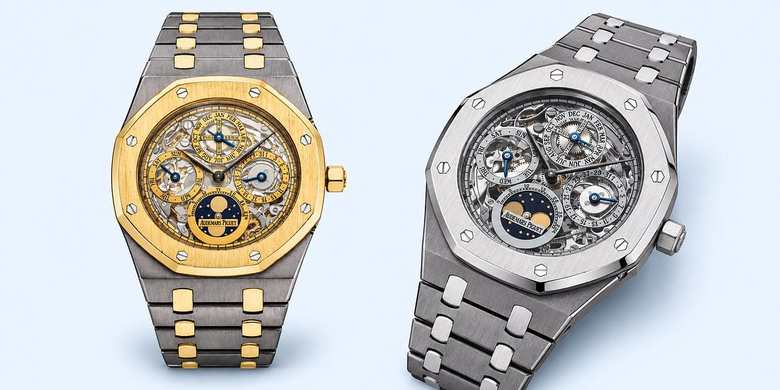
At the Phillips Royal Oak 50th sale in May 2022, the ref. 25829TP, a 1997 tantalum and platinum openworked perpetual calendar from a run of 16, sold for about $930K against a $145K to $290K estimate. That is a 1990s AP in a metal AP never fully polished, at the price of twenty-five Chronomètres Bleus at retail. Treat it as a peak: the tantalum and yellow gold version, ref. 25829TA, also 1997 and one of 15, brought about $227K at Phillips Hong Kong in November 2024, just above its estimate.
Urwerk’s UR-105 TTH was about $93K in 2021, which SJX noted was 20% above the steel UR-105 CT, for a watch whose front plate and lid alone are tantalum. Moser’s first tantalum piece, the Endeavour Perpetual Calendar Tantalum Blue Enamel, launched at $82.5K in 2023 and lists at $94.5K at US retailers in October 2026.
Read The Four Winners of the $10.5B H1 2026 Secondary Watch Market
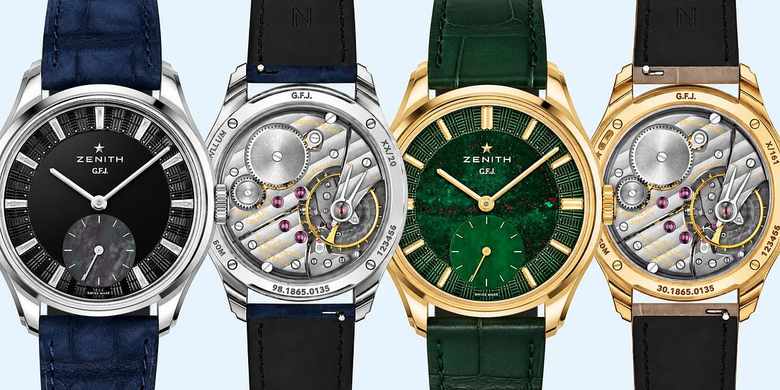
At Watches and Wonders 2026, Zenith put its Calibre 135 in a 20-piece tantalum G.F.J. at $83.4K against $51.9K for the 161-piece yellow gold version. The tantalum watch also has an onyx dial and baguette diamond indexes, so the 60% premium is not the metal alone. The metal is still the headline, for a material at 1% of gold’s price.
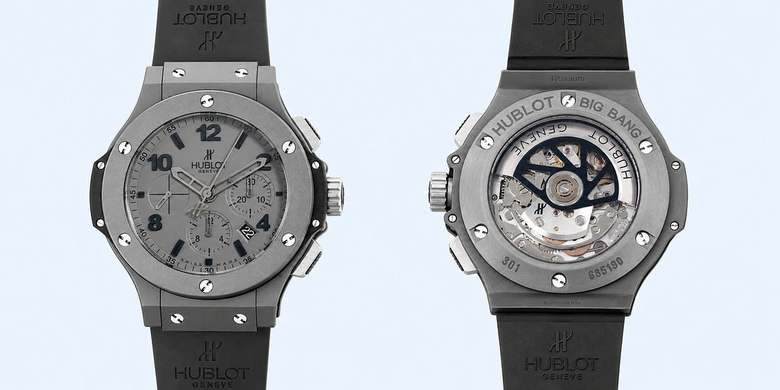
The rest of the ladder is thinner than the headlines suggest. Hublot is the one big brand that kept tantalum in the regular catalog, with the Big Bang Tantalum Mat from 2008, listed at $22,900 by 2015 and sold at Phillips Hong Kong for about $14.5K in March 2022.
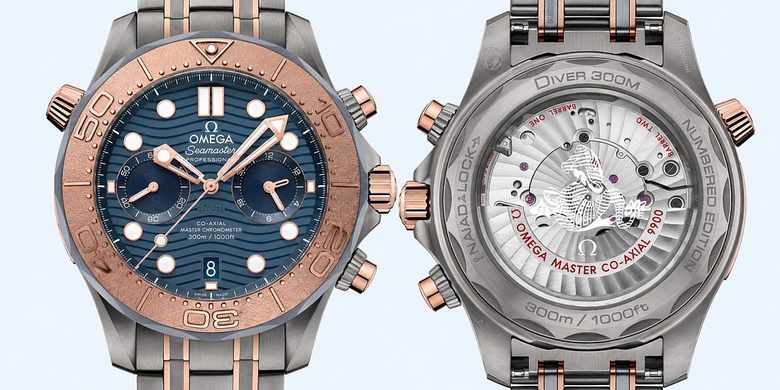
Panerai made the Luminor Marina Tantalium in 2003, 300 pieces in a full tantalum case, now about $12.5K pre-owned. Omega still pairs it with titanium and Sedna gold on the current Seamaster Diver 300M chronograph, a numbered edition since 2020 with a tantalum bezel and bracelet links at $27.3K.
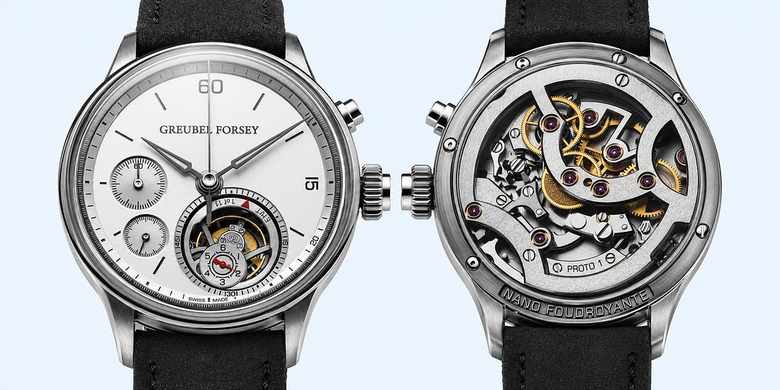
And Greubel Forsey put a tantalum bezel and caseback on the 11-piece Nano Foudroyante EWT in November 2024 at about $565K before tax, then dropped the metal for the all-white-gold series version in August 2025. Two brands kept it in the catalog; the rest treated it as a one-time event.
Now the other end. Atelier Wen, the Chinese brand with two French founders, put a full tantalum case and bracelet on its Perception in September 2024, 25 pieces at $10,000 with a Chinese movement, and sold out.
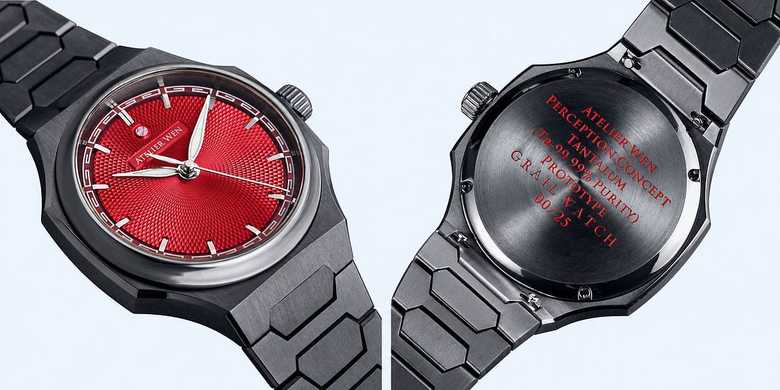
The Inflection followed in November 2025 as the first permanent full-tantalum bracelet collection, $29,800 on the bracelet and $19,800 on a strap, with a Girard-Perregaux movement and grand feu enamel.
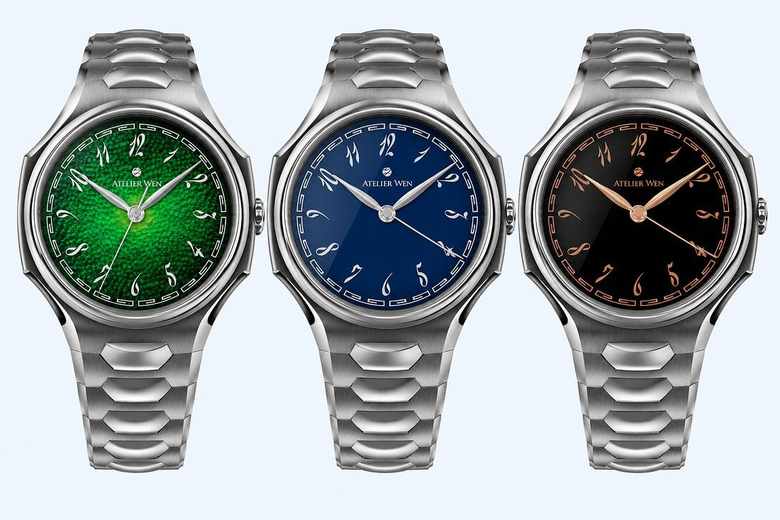
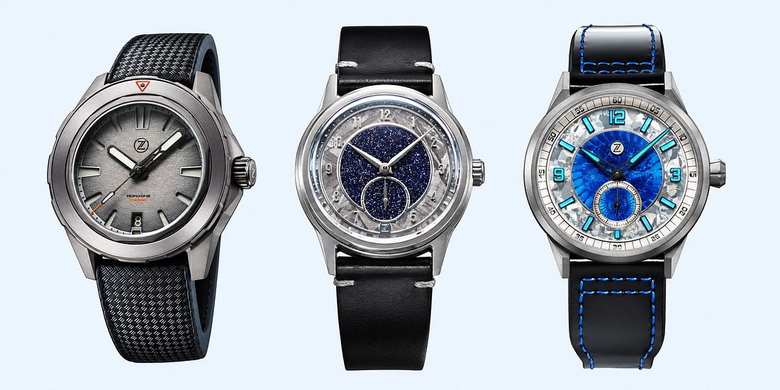
The Shuò with Massena LAB is $44,100 in the US, 50 pieces, deliveries from early 2027. Look where the money sits: a solid gold dial with 14.6 grams of gold, hand engraved in Switzerland by Coralie Mercier for GT Cadrans in Lonay, on a customized GP03300. The tantalum is the frame. The dial and movement are the price. 1776 Atelier, the American brand of Jason Lu and Zach Smith, placed 11 of 13 Liberty 250 Tantalum pieces at $39K on launch day at Indies.NYC in October 2026, per Traina. Ming sells a tantalum Polymesh bracelet for $6.5K. J.N. Shapiro launched the Infinity Radiant in June 2026, a 38mm monopusher chronograph in tantalum on an optional tantalum bracelet, at $35.9K before tax, and allocated the first run of 75. Zelos of Singapore put a full tantalum case on its Swordfish diver in January 2021 at $1,499 with a Seiko movement, then on the Mirage that August at $4,900 with an eight-day La Joux-Perret caliber, sold 50 Nova 37mm at $1,999 in 2024, and in late 2025 sold out 50 Comet 39 in tantalum at $2,499 with a Swiss Peseux 7001.
Read 16 Voutilainens Under Guard at WatchTime NY 2026 and You Couldn’t Try One On.
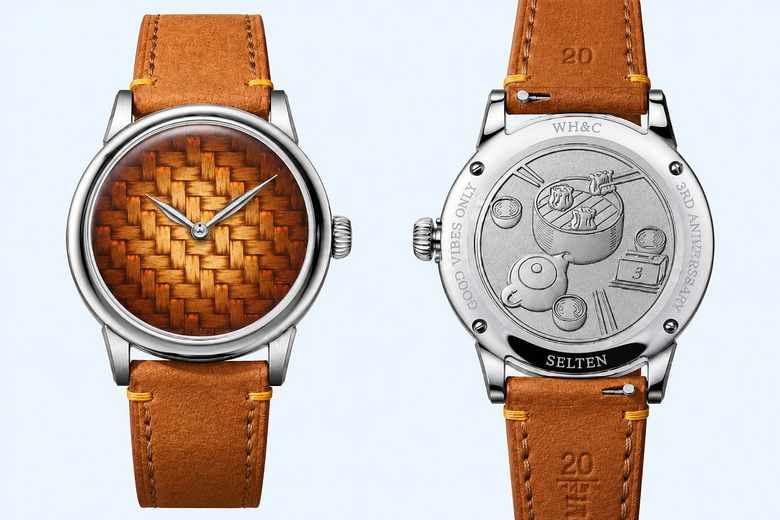
And the case Traina handled at Windup is an upgrade to the Yum Cha, a 100-piece Selten collaboration with Watch Ho & Co. that lists at $4,950 in steel. Jackie Ho, the Hong Kong-raised founder of Watch Ho & Co. and the main voice in the South China Morning Post’s tantalum feature, told Traina the tantalum version is offered at cost. No price is published and at cost is his word, not an audited number, but a well-finished tantalum case as an option on a $5K watch is the point. In 2026 a tantalum watch runs from $1.5K to a $930K Royal Oak, and the floor has been there since 2021. In 2016 it ran from a Hublot to a Journe, and both were five figures.
WHERE THE KNOW-HOW WENT
Supply-side change is already on the record. Robin Tallendier, co-founder of Atelier Wen, told Europa Star in November 2025 that in 2022 nobody was going beyond cases, that of 11 workshops he approached only one produced an acceptable prototype, and that the brand then signed an exclusive deal with a workshop in China. Several brands already asked Atelier Wen to supply tantalum components; many are reluctant to manufacture in China; Atelier Wen is not, provided it is not asked to become what he called a tantalum supermarket. Set that beside Traina’s Windup note on a well-finished Chinese tantalum case offered at cost as an option on a microbrand collaboration. The moat did not leak. It drained. The capability the Swiss guarded as a trade secret for thirty years is now a Chinese manufacturing competency sold as a service.
We watched the same thing with ceramic, with silicon hairsprings, and before that with the integrated steel bracelet. A material or process starts as proof of mastery, stays exclusive while the tooling knowledge is scarce, and becomes a line item once someone industrializes it. Tantalum took longer because the metal fights harder. The Swiss answer is already in motion: in November 2025 Stollenwurm, a Le Locle independent founded in 2024 that builds in platinum and tantalum, and AB Concept, a La Chaux-de-Fonds machinist, announced the first 3D-printed tantalum watch components, a buckle that tested harder than machined metal, with polishing still in development. When the machining moat drains, the next one is printing.
WHAT THE TOP END IS DOING ABOUT IT
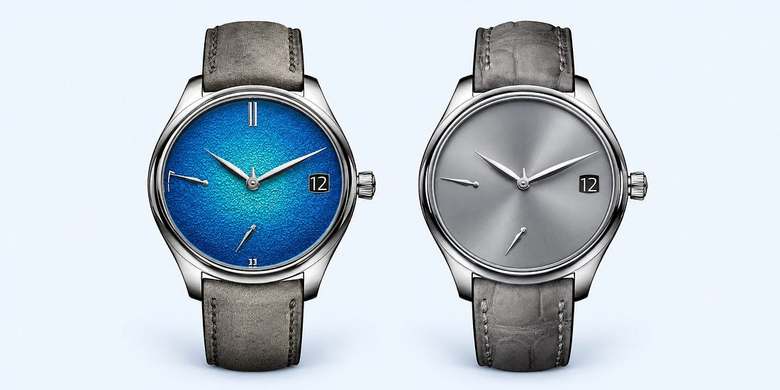
Repositioning is the response from the brands that built a story on tantalum. Moser’s Endeavour Perpetual Calendar Concept Tantalum, 50 pieces at $94.5K at US retailers, is the first watch with tantalum on the dial as well as the case, machined from solid plate with a brushed sunburst and no lacquer; Stevie Watches on Substack made it the example of the industry’s swing from texture to bare surfaces. Moser is no longer claiming it can make a tantalum case. It is claiming a surface a supplier in Shenzhen cannot yet give you. Journe’s polished case plays the same role, and the Bleu survives intact because it was never only a metal story: the dial defeated more workshops than the case did, and the movement is gold. Zenith’s G.F.J. pairs the metal with the most decorated observatory movement in history and lets the movement carry the price. Every tantalum watch now has to answer the question a buyer should ask: what else are you selling?
Once the case stops being the headline, the headline moves back to movement, finishing and dial. Good for independents, who always competed there; uncomfortable for anyone whose pitch was the metal. For fifteen years a brand could say the word tantalum and let the metal do the pricing. China took the word and sold it at cost.
ON THE WRIST
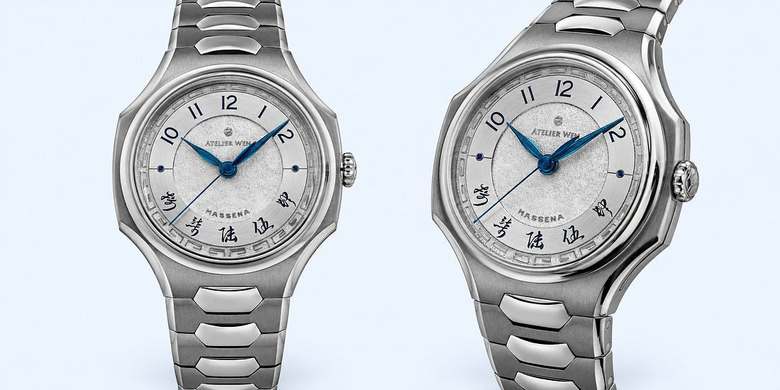
The Shuò is unbelievably heavy, far denser than it looks, and that density is also why it barely marks. A full tantalum bracelet also tells you where the metal belongs. It cannot be laser welded or soldered, so it only works as one-piece components, and it is too dense and too gray for anything inside a movement. It is an outside metal, built for the parts that take the hits, which is probably why a brand making integrated bracelets, rather than calibers, pushed it past the case.
For the metallurgy in more depth, Fratello’s explainer and The 1916 Company’s guide to unusual case materials are the two to read; Quill & Pad and Europa Star have the fullest accounts of the Inflection.
LESSONS LEARNED
Price the skill, not the material, and know when the skill is leaving the building. Every brand here charged a premium because almost nobody else could machine and polish the metal. That premium was real for thirty years and is gone now. Difficulty is a weaker moat than rarity, because difficulty is exactly what manufacturing learns to solve. Any brand whose pitch rests on a hard-to-work material should assume a supplier will catalog it within a few years and plan the next argument first.
For buyers, a tantalum case is still beautiful and still heavy, and no longer a reason to pay up on its own. Pay for the polish Journe does, the dial Moser does, or the movement Zenith puts behind it; those are what a supplier cannot yet ship in a box. Judge a $40K tantalum watch as you would a $40K steel one, by what is inside and how it is finished, with the metal as a bonus.
For the independents this is good news. The scarce ingredient moved from the case back to the workbench, where they were always strongest. The metal gets you into the conversation. The watch has to earn the price.
Next up: Is F.P. Journe a Bubble? The Data Behind Its 197% YoY Surge
ABOUT
Watch Lover XO is written by two collectors who wear and follow watches, from everyday favorites to rare independent pieces. We cover the secondary market, new releases and the watchmakers behind them.
For more images and videos, follow watchlover.xo on Instagram.